Two sapphires can sit side by side in a tray, look almost identical, and carry very different price tags. The difference is often invisible: one has been heated, the other hasn't. Treatments are a normal, long-established part of the gem trade, and most stones on the market have had something done to them. Knowing what you're looking at — and what you're actually paying for — changes the way you buy.
You don't need a laboratory on your kitchen table. You do need to know which treatments leave traces you can spot with a loupe, which ones only a gem lab can confirm, and how to ask questions that a straight dealer will happily answer.
Why treatments exist
Rough gem material arrives with problems: colour that's too pale, too brown, or unevenly spread; fractures that make a stone look cloudy. Treatments improve appearance, stability, or both. Some are permanent and stable, such as heating. Others, like oiling an emerald, are accepted trade practice but need care over time. Some, like lead-glass filling in ruby, make a stone more fragile than the rough it came from.
None of this is automatically dishonest. The problem is price and information: a heavily treated stone sold at untreated prices, or sold with no mention of treatment at all. That's where buyers get hurt.
Heat treatment: the quiet one
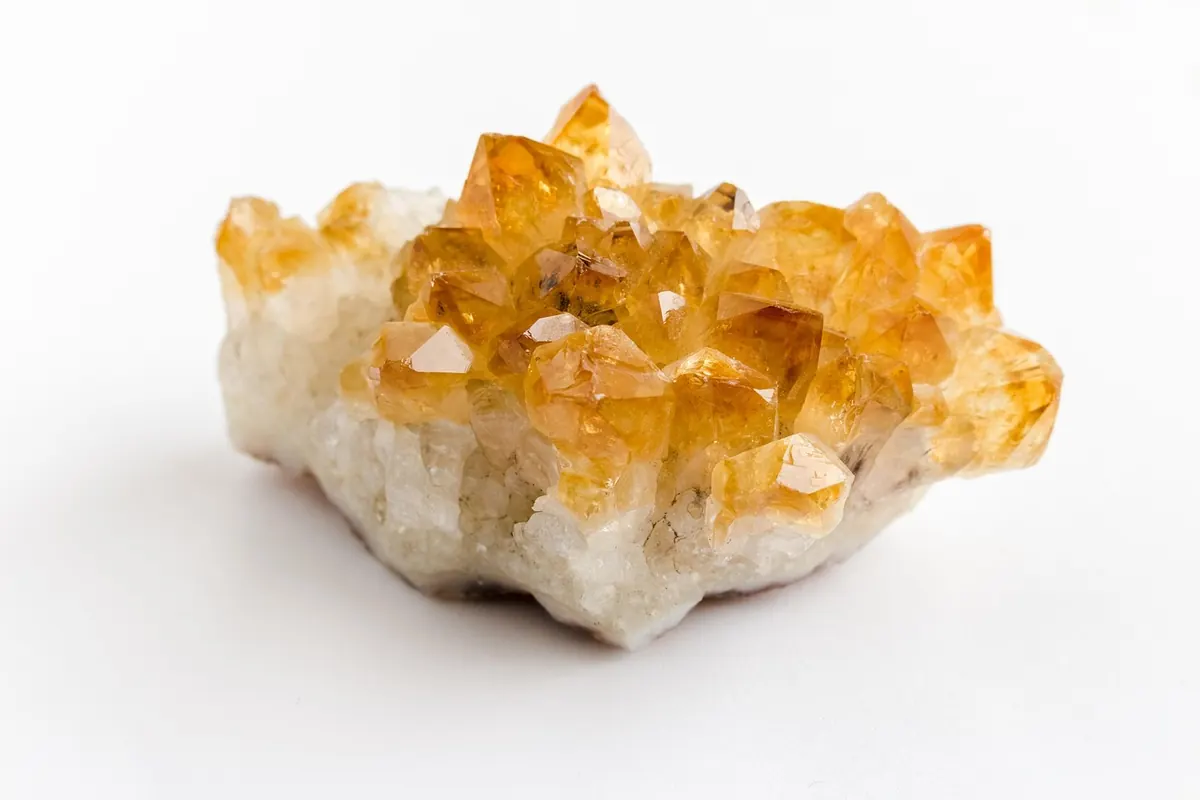
Heating is the most common treatment in the trade. Sapphire, ruby, tanzanite, aquamarine, blue zircon and citrine are routinely heated, and much of the citrine on the market is amethyst that has been heated until the purple turns gold. Heat is usually applied to rough before cutting. The result is stable, permanent, and doesn't normally make a stone more fragile.
Where it matters is value. In fine sapphire and ruby, an unheated stone with strong colour commands a serious premium over a heated one of the same look. So "natural" and "untreated" are two different questions, and you should ask the second one.
Clues you might see under a loupe
- Fine silk — the rutile needles that give some sapphires a sleepy haze — may be broken up or partly dissolved, leaving a cleaner but flatter look.
- Fractures around included crystals can look melted or disc-like, with rounded edges rather than sharp ones.
- Colour zoning sometimes survives heating, showing as pale and dark bands through the stone.
- In some sapphires, tiny haloes around crystals (zircon haloes) remain as evidence of what the stone went through.
Honesty matters here: plenty of heated stones show absolutely nothing under a loupe or even a microscope. Confirming heat treatment reliably takes laboratory equipment. Loupe work helps you screen for obvious treatments; it can't prove absence. Also worth knowing: beryllium diffusion is a different process that pushes colour into a sapphire's surface layers, and those stones can chip or lose colour if repolished.
Dyeing: colour that hides in the cracks
Dyeing works best on porous or heavily fractured material. Agate, howlite, turquoise, lapis lazuli, jadeite, quartz and pearls are all dyed in quantity. Dyed howlite with black veining is a familiar stand-in for turquoise, and dyed crackled quartz turns up as cheap pink "rose quartz".
Quick checks at the counter
- Look along the cracks. With a 10x loupe, check surface-reaching fractures and pits. Dye collects there and reads darker than the surrounding stone, sometimes as a fine coloured line.
- Check for unnaturally even colour. Real turquoise and lapis vary. A flat, uniform, slightly plastic-looking blue across a large surface is a prompt to look closer.
- Follow the banding. On dyed agate, colour sometimes sits more heavily in the softer bands, or darkens towards the outside of the slice.
- Test with care, if at all. A cotton bud lightly dampened with acetone, dabbed on an inconspicuous spot, can lift dye from a porous stone. Never do this on pearls, on a finished setting, or on anything you don't own — and accept that it is a crude test with false negatives.
Fracture filling: emerald oil, ruby glass, diamond filler
Fracture filling means introducing a substance into surface-reaching cracks. The filler's optical properties are close to the host stone's, so the fractures become far less visible. It's the treatment with the biggest gap between "accepted practice" and "buyer beware".
Emerald
Almost every emerald is oiled or resin-filled, and the trade accepts this as normal. Cedarwood oil is traditional; modern synthetic resins are more durable. Clues include a slight flash along fractures when you tilt the stone, and tiny bubbles trapped in the filler. Oiled emeralds can dry out and need re-oiling over the years. Never clean an emerald in an ultrasonic tank or with steam, and keep it away from solvents and harsh detergents.
Ruby
Lead-glass filling disguises fractures in low-grade ruby. It can make an otherwise unsaleable stone look presentable — and it also makes the stone sensitive to heat and acids. A jeweller's torch during a repair, or a dip in pickle, can wreck it. Look for gas bubbles inside the filled areas and blue or purple flashes along the fracture lines. For anything beyond a cheap piece, insist on an independent laboratory report.
Diamond
Some diamonds are laser-drilled to reach a dark inclusion, then filled with a glass-like resin to hide the drill hole. The giveaway is the flash effect: tilt the stone and the filled area blinks with orange, violet or blue. Filled diamonds are worth a fraction of comparable untreated stones, and the filler can be damaged by heat. Ask specifically whether a diamond has been clarity enhanced.
What sellers are expected to tell you
International trade guidance, and consumer protection rules in the UK and elsewhere, work on the same principle: a treatment that affects value should be disclosed, and misleading a buyer by staying silent can count as much as a false claim. In practice, standards vary. Auction houses usually list treatments in the catalogue; a beach stall may not mention anything.
So ask directly, and ask in writing. "Has this stone been treated? If so, how?" Then get the answer onto the receipt or invoice. If you later need to argue the point, an independent gemmologist's written opinion carries far more weight than a shop-floor conversation. For any dispute, this is general information rather than legal advice — take proper advice on your own situation.
A practical buying checklist
- Ask "heated or unheated?" rather than "is it natural?". They are not the same question.
- For emeralds and rubies, ask what the fractures are filled with: oil, resin or glass.
- For significant purchases, buy stones with a report from a recognised independent laboratory where possible.
- Carry a 10x loupe and use it on the back of the stone as well as the front. Remember that a clean look proves nothing.
- Treat filled and oiled stones as delicate: no ultrasonic cleaners, no steam, no acid dips.
- If the price looks too low for the grade being claimed, ask why. The answer is usually a treatment.
- Keep the invoice, the description and any report together with the stone.
Buying with confidence
A heated sapphire is still a sapphire, and a well-oiled emerald is still an emerald. The point isn't to avoid treated stones — most of the market is made of them, and many are excellent value. The point is to know what you own, so you pay a fair price, clean it correctly and insure it accurately.
A good jeweller will answer treatment questions without flinching, because there's nothing to hide. If you get evasion instead, take that as your answer, put the stone down and walk on. And for anything expensive, pay a qualified gemmologist for an independent opinion before you commit: it's a small cost next to the price of getting it wrong.